Ayurvedic Management of Urticaria
As we all tend to live in a modernised era; diseased environments, junk food habits, work shift duties, anxiety, etc., lead to an imbalance of body harmony. This imbalance leads to the vitiation of tridoshas and starts manifesting as a disease. People in general know very little about Dincharya and Ritucharya. As a result, individuals typically experience gastrointestinal symptoms first, followed by additional symptoms. Sheetpitta is classified as a Tridoshaj vyadhi (disease) in Ayurveda. Vata and Pitta Dosha are prevalent, while Ras and Rakta are the major Dushyas.
Sheetapitta (urticaria) is one of the Twak Vikara (skin illnesses) associated with the Hetu of Kotha and Udarda. Vata and Kapha are two “Doshas” that are most affected, and this is coupled with Pitta, resulting in Tridosha Prakopa, which causes redness, swelling, itching on the skin, and so on. Urticaria, also known as hives, is a type of skin rash that appears as red, raised, and itchy bumps. Hives usually occur following an infection or an allergic reaction to medication, insect bites, or food. According to research, about 20% of people are affected by urticaria at some point in their lives
Urticaria is classified into two categories:
- Acute – lasts less than 6 weeks
- Chronic – lasts more than 6 weeks
Let’s elaborate on how Ayurveda manages the symptoms of urticaria.
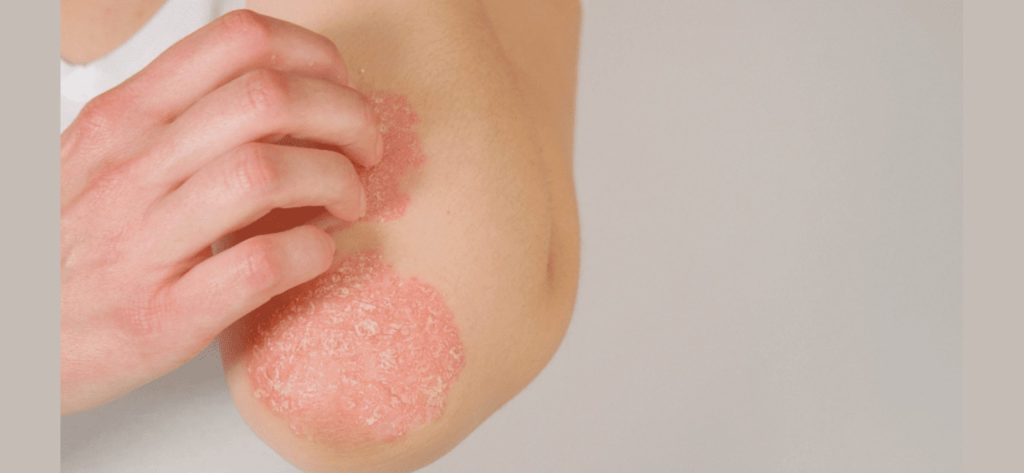
Ayurvedic understanding of urticaria (sheetapitta)
In Ayurveda, urticaria is caused by an imbalance in doshas and dysfunction of the digestive fire- agni.
1. Dosha imbalance
- Pitta imbalance: Excessive consumption of hot, spicy, sour, or pungent meals, as well as exposure to heat and stress, can result in the accumulation of exacerbated Pitta dosha. This can cause skin irritation, redness, and itching, which are common symptoms of urticaria.
- Kapha imbalance: Consuming heavy, chilly, and mucus-producing foods can cause a Kapha imbalance, resulting in the accumulation of toxins and fluid retention in the body, which can produce skin eruptions.
2. Dysfunction of Agni
Weak digestive fire can lead to the formation of ama (toxins), which can accumulate in the body and trigger allergic reactions like urticaria. This leads to swelling and inflammation in the affected areas.
Symptoms of urticaria in Ayurveda
The symptoms of urticaria can be listed as–
- Twak Roga (skin diseases): Urticaria affects the skin, resulting in raised, itching welts. These welts are usually red and vary in shape and size.
- Kandu (itching): Urticaria is marked by severe itching. It can be severe and persistent, resulting in pain and discomfort.
- Daha (burning sensation): Because of the increased Pitta dosha, impacted people may feel a burning sensation on their skin.
- Asrigdara (bleeding): Urticaria can cause bleeding from the welts due to blood vitiation in severe cases. This symptom suggests the existence of Pitta dosha.
Ayurvedic treatment for urticaria
A. Panchakarma therapy
Panchakarma therapy is a cornerstone of Ayurvedic treatment, aimed at detoxifying the body and restoring balance to the doshas. For urticaria (Sheetapitta), Panchakarma can be particularly effective in cases where there is a significant dosha imbalance or when symptoms are severe.
Panchakarma Therapy for Urticaria:
- Poorvakarma (Preparation Phase): This phase prepares the body for the main detoxification procedures.
- Snehana (Oleation)
- Internal Oleation: Ingestion of medicated ghee or oils such as Ghrita or Til Taila to loosen toxins.
- External Oleation: Massage (Abhyanga) with medicated oils to mobilize toxins towards the gastrointestinal tract.
- Swedana (Sudation)
- Steam Therapy: Use of medicated steam to induce sweating, helping to further mobilize toxins.
- Pradhanakarma (Main Procedures): The main detoxification treatments are tailored based on the individual’s dosha imbalance and the severity of the condition.
- Vamana (Therapeutic Emesis)
- Indicated primarily for Kapha imbalance.
- It helps to expel excess Kapha and toxins from the upper gastrointestinal tract through controlled vomiting.
- Virechana (Therapeutic Purgation)
- Best suited for Pitta imbalance.
- Utilizes herbal laxatives to cleanse the intestines and expel excess Pitta and toxins.
- Raktamokshana (Bloodletting)
- Effective in severe cases of urticaria.
- Helps remove toxins from the bloodstream and reduces inflammation and itching.
- It can be done using methods like Jaloukavacharana (leech therapy) or Siravedha (venesection).
- Basti (Medicated Enema)
- Useful for Vata imbalance.
- Administers medicated oils or decoctions through the rectum to cleanse the colon and balance Vata.
- Paschatkarma (Post-Treatment care): This phase focuses on restoring normalcy and strengthening the body after detoxification.
- Dietary Regulations
- Follow a light, easily digestible diet (Peya, Manda, Yusha) to gradually reintroduce normal food.
- Avoid triggers such as spicy, oily, and processed foods.
- Lifestyle Adjustments
- Maintain a routine that includes adequate rest, stress management, and regular, mild exercise.
- Continue practicing stress-relief techniques like yoga and meditation.
- Herbal Medications
- Use of rasayanas (rejuvenating therapies) to strengthen the immune system and promote overall health.
- Continued use of specific herbs such as Guduchi, Haridra, Neem, and Amalaki to support ongoing detoxification and immune function.
B. Internal medications
Herbs | Uses |
Guduchi | Known for its immunomodulatory and anti-inflammatory properties. It helps reduce allergic reactions and strengthens the immune system. |
Haridra | Contains curcumin, which has potent anti-inflammatory and anti-allergic properties. It helps reduce itching and inflammation. |
Neem | Acts as a blood purifier and detoxifier. Neem can help clear toxins from the body and improve skin health. |
Amalaki | Rich in vitamin C, amalaki helps boost immunity and reduce inflammation. It also aids in detoxification. |
Khadirarisha | An herbal decoction that helps in purifying the blood and reducing skin allergies. |
C. External applications
Applications | Advantages |
Herbal pastes | The application of pastes made from herbs like sandalwood, turmeric, and neem can soothe the skin and reduce itching and inflammation. |
Kumari (aloe vera) | Aloe vera gel has cooling and soothing properties and can be applied to the affected areas to relieve itching and inflammation. |
D. Herbal teas and decoctions
Herbal Teas:
- Drinking tea made from herbs like ginger, turmeric, and liquorice can help reduce symptoms and boost immunity.
Decoctions:
- Triphala Decoction: Triphala (a combination of three fruits: Amalaki, Bibhitaki, and Haritaki) helps in detoxification and maintaining digestive health.
- Guduchi Decoction: Prepared by boiling Guduchi stems in water, this decoction helps in reducing allergic reactions and boosting immunity.
E. Diet and lifestyle modifications
Dietary recommendations:
- Avoid trigger foods such as cold, spicy, oily, and allergenic foods.
- Consume light, warm, and easy-to-digest foods that balance the doshas.
- Include cooling foods like cucumber, watermelon, and coconut water in the diet.
Lifestyle modifications:
- Avoiding exposure to known allergens and triggers.
- Practising regular detoxification through seasonal panchakarma.
- Incorporating stress-relief techniques like yoga, meditation, and pranayama (breathing exercises) to maintain mental and emotional balance.
Conclusion
Embarking on the Ayurvedic journey to manage urticaria (Sheetapitta) is a step toward holistic healing and profound wellness. Ayurveda, with its time-tested wisdom, offers a comprehensive and natural approach to not only alleviate the symptoms of urticaria but to address its root causes, restoring balance and harmony within the body.
Why choose Ayurveda?
- Root Cause Treatment: Ayurveda doesn’t just treat symptoms; it targets the underlying dosha imbalances, offering a lasting solution.
- Holistic Approach: Combining dietary adjustments, herbal remedies, panchakarma therapies, and lifestyle modifications ensures comprehensive care.
- Natural and Safe: Utilizing nature’s bounty of herbs and treatments, Ayurveda offers gentle yet effective solutions without harmful side effects.