Pathophysiology and clinical features of Raynaud Phenomenon
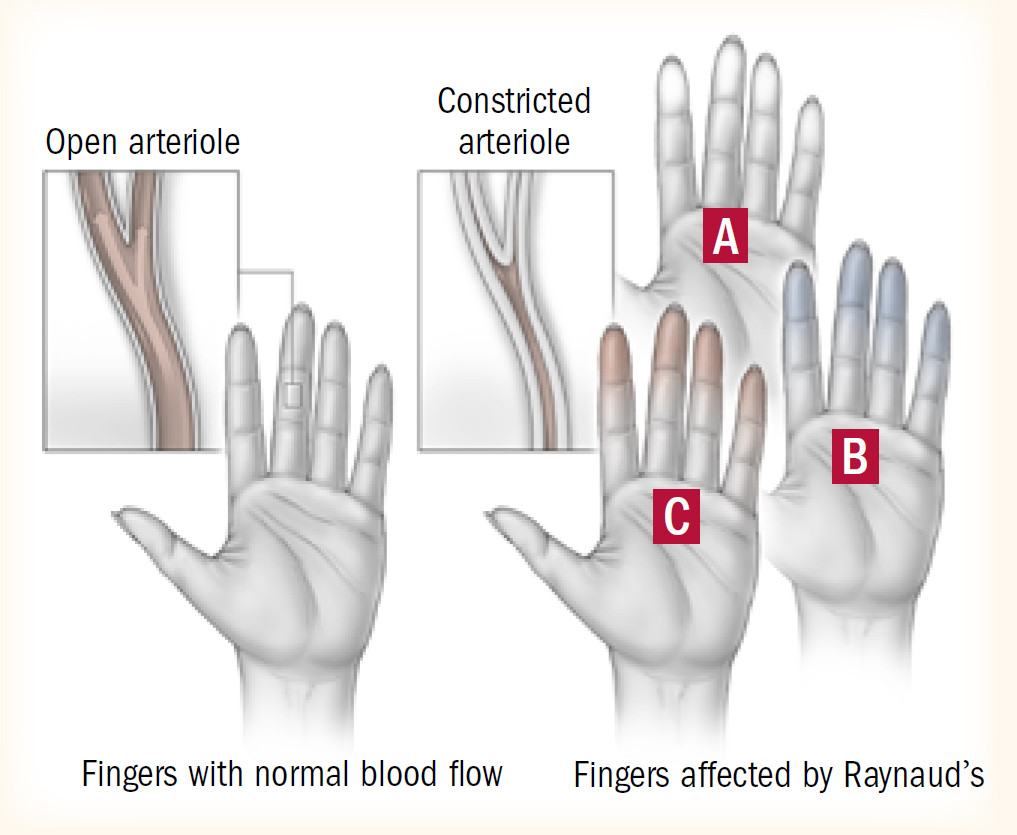
Raynaud’s syndrome is a disorder that affects tiny blood vessels, mostly in the fingers and toes, but sometimes in the nose, lips, and ears. It presents as periodic spasms of the blood arteries that are frequently triggered due to cold weather or stress. Ayurveda recognises it with a similar condition known as ‘Siragata Vata’, which is characterized by obstructions in the circulatory pathways. And women are more likely to be affected by Raynaud’s disease. It mostly occurs among people who live in regions with colder climates. These obstructions are commonly identified by numbness, stiffness, weakness, and eventually weakness in the hands and feet.
Ayurvedic Perspective Raynaud Phenomenon’s Pathophysiology
According to Ayurveda, the root cause of this disease is an imbalance of Vata dosha, especially Apana Vata, which affects the lower extremities and evacuation. An exacerbated Apana Vata causes constriction of the Srotas (channels) responsible for blood circulation, especially in the extremities, which can lead to:
- Dhatu Vaigunya: Dhatu Vaigunya refers to irregularities in the creation and function of tissues, namely blood (Rakta) and nerve tissue (Majja).
- Sroto Obstruction: Blockage in blood circulation channels (Srotas) lowers the oxygen and nutrition supply to the extremities.
- Agni Mandya: Affects metabolic fire by compromising the nutrition conversion into energy and causing cold hands and toes
Clinical Features of Raynaud's Phenomenon
As discussed in Ayurveda Raynaud’s phenomenon is viewed as a Vata dosha imbalance, which governs movement and air. This imbalance is reflected in the following ways:
Prakopas (Aggravation of Vata)
- Pallor (Shweta Varna): Raynaud’s disease begins with a pale appearance due to exacerbated Vata obstructing the flow of Rakta (blood).
- Cyanosis (Neela Varna): The bluish discolouration indicates a significant constriction of the Srotas (channels) caused by excess Vata, resulting in oxygen deprivation in the tissues.
- Rubor (Lohita Varna): The body’s delayed response to re-establish circulation causes redness and warmth, which can cause pain due to the unexpected inflow of blood.
Other Symptoms
Apart from the colour changes, Raynaud’s sensory problems are connected to a Vata imbalance.
- Numbness (Suptatha): Vata vitiation can cause numbness (Tandava), which affects the body’s sensory operations.
- Tingling (Chimichimayana): A prickly feeling occurs due to exacerbated Vata interrupting nerve impulses.
- Pain (Shoola): Vata imbalance can cause severe pain (Shoola), resulting in inflammation and tissue damage.
These symptoms, when considered together, result in a weakened state of the body’s circulatory system, a vital function managed by Vata. Raynaud’s disease mostly affects the fingers and toes. However, it may also affect other parts of the body, including the nose, lips, ears, and even the nipple. After warming up, the recovery of blood flow to the affected area may take up to 15 minutes.
Raynaud's Phenomenon: Primary Vs. Secondary
Raynaud’s can have two forms. According to modern medicine, the first one is known as idiopathic Raynaud’s. However, Ayurveda considers it a basic imbalance of Vata dosha, namely Apana Vata. This imbalance, caused by fundamental constitutional variables, can often result in minor symptoms and may even resolve naturally. The second kind is termed ‘Secondary Raynaud’s’ which is more complicated. In Ayurvedic terms, this occurs when an underlying imbalance in another dosha or tissue (Dhatu) impairs the circulatory system. This secondary imbalance frequently aggravates Vata, causing more severe symptoms of the illness. It is worth noting that secondary presentations often appear around the age of 40.
Ayurveda’s Management of Raynaud Phenomenon
In Ayurveda, the Raynaud Phenomenon involves a comprehensive strategy that treats the root cause of the condition by balancing the Doshas, increasing circulation, and removing Ama (toxins) from the body.
Pacifying Vata and Pitta Doshas
The primary goal of Ayurveda is to calm Vata, which governs movement and circulation, and Pitta, which regulates blood flow and metabolism. However, dietary adjustments are critical in this process. Consuming warm, unctuous, and nutritious meals can assist in balancing Vata. Soups, stews, and warm drinks are good, but make sure you avoid cold, dry, and raw meals. Similarly, intake of spices like ginger, cinnamon, and black pepper can help in improving circulation and digestion.
Herbal Remedies
Ayurveda has a diverse range of herbs that can help control the Raynaud Phenomenon. Ashwagandha (Withania somnifera) is popular for its ability to regulate Vata and assist the neurological system. Brahmi (Bacopa monnieri) relaxes the mind and improves circulation. Guggulu (Commiphora mukul) is especially useful for increasing blood flow and detoxifying. These herbs can be used as supplements or included in everyday drinks and meals.
Lifestyle Changes
Adopting a Vata-balancing lifestyle plays a key role in the treatment. Keep your body warm, especially in the extremities. Layer clothing, as well as wearing gloves and warm socks, can help to reduce cold exposure. Meditation, yoga, and pranayama (breathing exercises) are all effective stress management approaches for relaxing the mind and regulating Pitta. Additionally, regular, gentle exercise, such as walking or swimming, can enhance circulation without exertion.
Panchakarma (Detoxification Therapies)
Panchakarma, a key component of Ayurvedic medicine, involves a series of detoxification procedures aimed at cleaning the body and balancing the doshas. Snehana (oleation) uses heated oils to calm Vata, whereas Swedana (sudation) employs steam treatment to open channels and improve circulation. On the other hand, Virechana (purgation) balances Pitta and eliminates impurities, resulting in a complete detoxification process.
External Therapies
Abhyanga (oil massage) is a relaxing and efficient approach that helps improve circulation and balance Vata. Regular massage with warming oils like sesame or mustard oil might improve blood flow to the extremities and relieve symptoms. Additionally, applying lepa (herbal paste) to the afflicted regions may also be useful. These pastes are prepared from herbs such as turmeric and ginger and can be applied to improve circulation and relieve pain. By adopting these Ayurvedic practices, people affected by the Raynaud phenomenon can establish a harmonic balance within their bodies, reducing symptoms and enhancing their overall well-being.
Conclusion
Raynaud’s phenomenon, also known as Siragata Vata in Ayurveda, is a syndrome that is caused by an imbalance of the Vata dosha, especially Apana Vata. This imbalance interrupts the smooth flow of blood, causing the typical symptoms of cold, numbness, and discoloured extremities. This disease can be efficiently treated by Ayurvedic principles. Remember that personalized solution from a Vaidya is required for the best outcomes. Individuals can substantially enhance their quality of life by providing regular care and attention to their general well-being and health.